ESG and Energy: Sustainable Campus Design
Summary
This project was a sustainability plan delivered to the University of Bristol Sustainability Team which investigated how the university can reach its target of Net-Zero target by 2030. The proposal contains a campus-scale decarbonisation study assessing the technical, planning, and financial feasibility of integrated renewable generation and storage to support this goal. The proposal outlined an iniative to create a renewable plant integrated into the campus with:
- 20 GWh/year renewable generation (offsetting ~29% electricity demand)
- £1.3M annual profit
- 16.5-year payback
- 4 ktCO₂/year reduction
Heating & Building Physics Modelling:
Developed a building heat-loss model to quantify heating demand and evaluate BREEAM-aligned energy-reduction strategies. Heating demand was calculated using:
The modelling demonstrated that heating demand could be reduced by approximately 12.7%, supporting BREEAM energy performance credits and low-carbon building operation.
Site Planning:
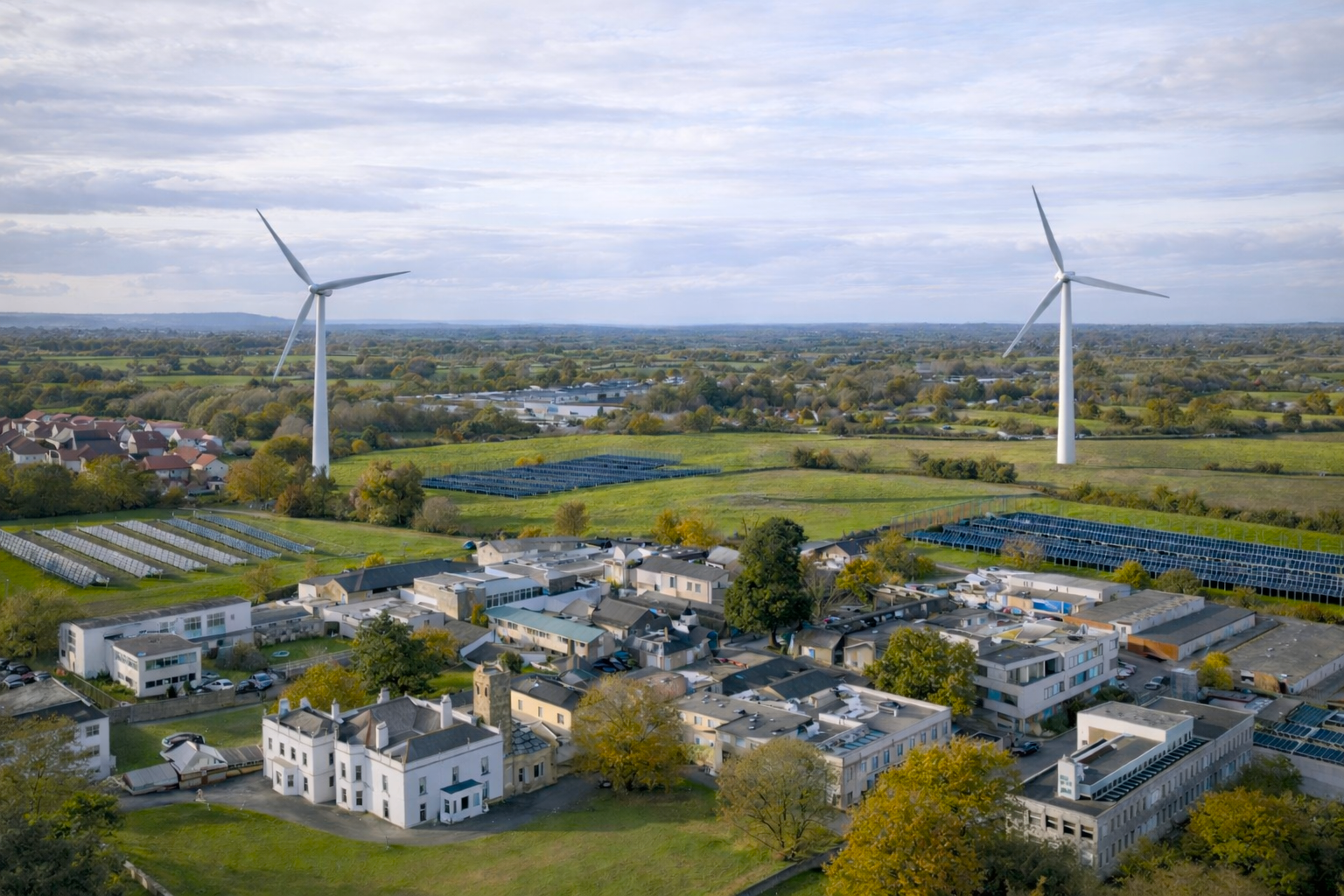
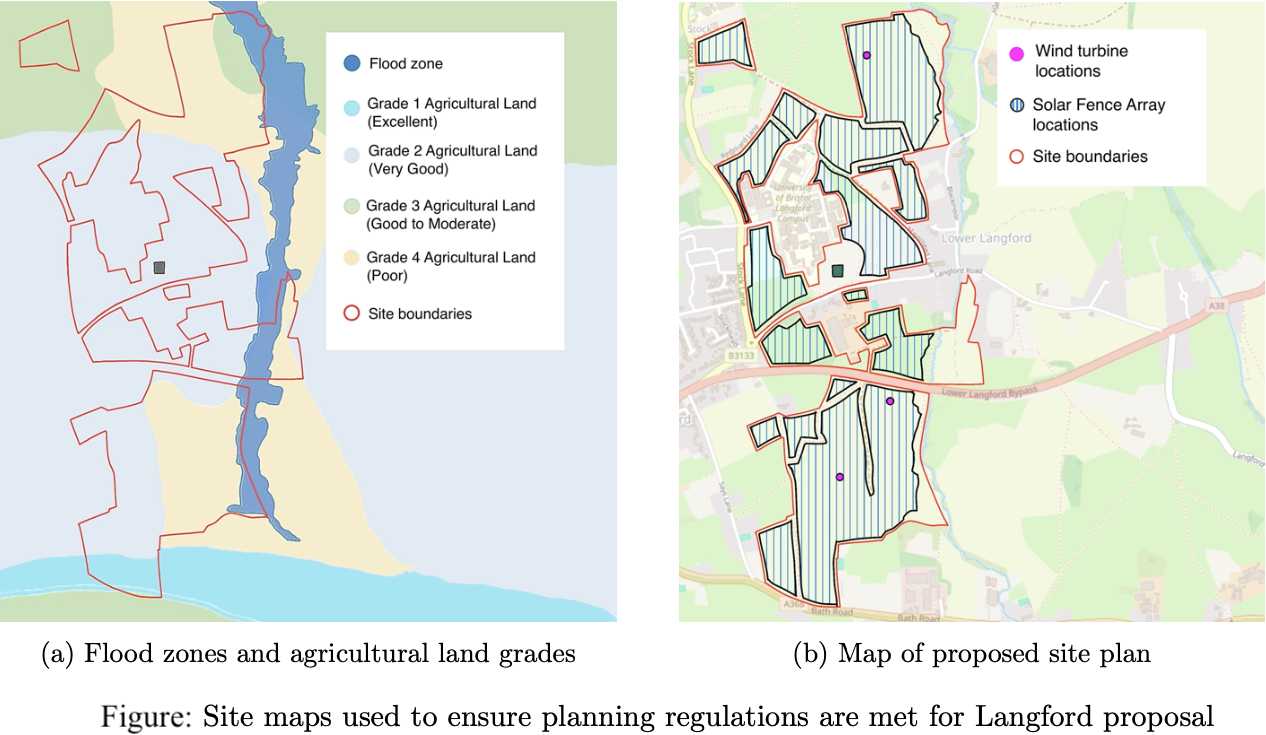
Developed a site plan to integrate a renewable energy generation plant within the existing veterinary campus. Land availability, access, proximity to grid connection points, and planning regulations were all considered.
Wind Generation Modelling:
Modelled annual generation from wind turbines using wind speed data and turbine performance characteristics. Wind speeds were adjusted to hub height using a standard wind shear model to calculate time-resolved power output. The governing relationship underpinning the model is given by:
Solar Generation Modelling:
Developed a first-principles solar energy generation model for bifacial solar fences, incorporating direct, diffuse, and reflected irradiance using site-specific weather and solar geometry data. The model enabled accurate prediction of annual energy yield and informed grid integration. The governing equation from which the modelling was derived is given as:
Energy Generation Plots:
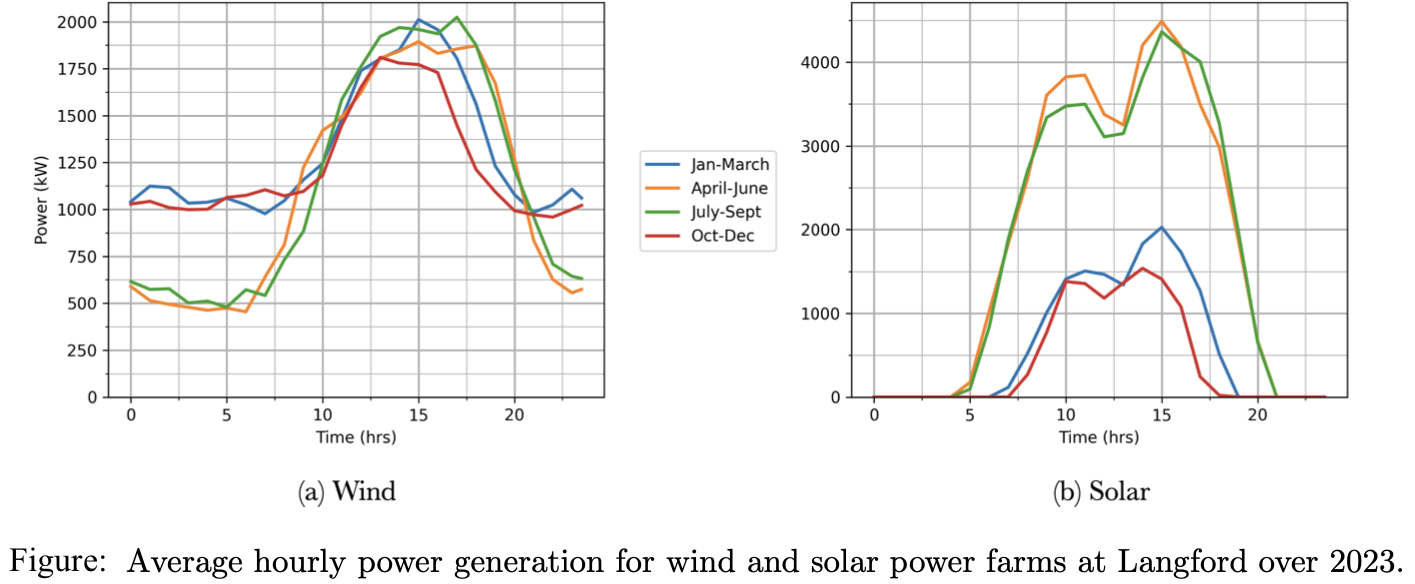
The modelling was used to provide accurate estimates of yearly energy generation from the renewable power plant and provide information regarding the hourly generation trends.
Battery Energy Storage System (BESS) Modelling:
Modelled a Battery Energy Storage System (BESS) to assess load-levelling performance and optimise energy dispatch.
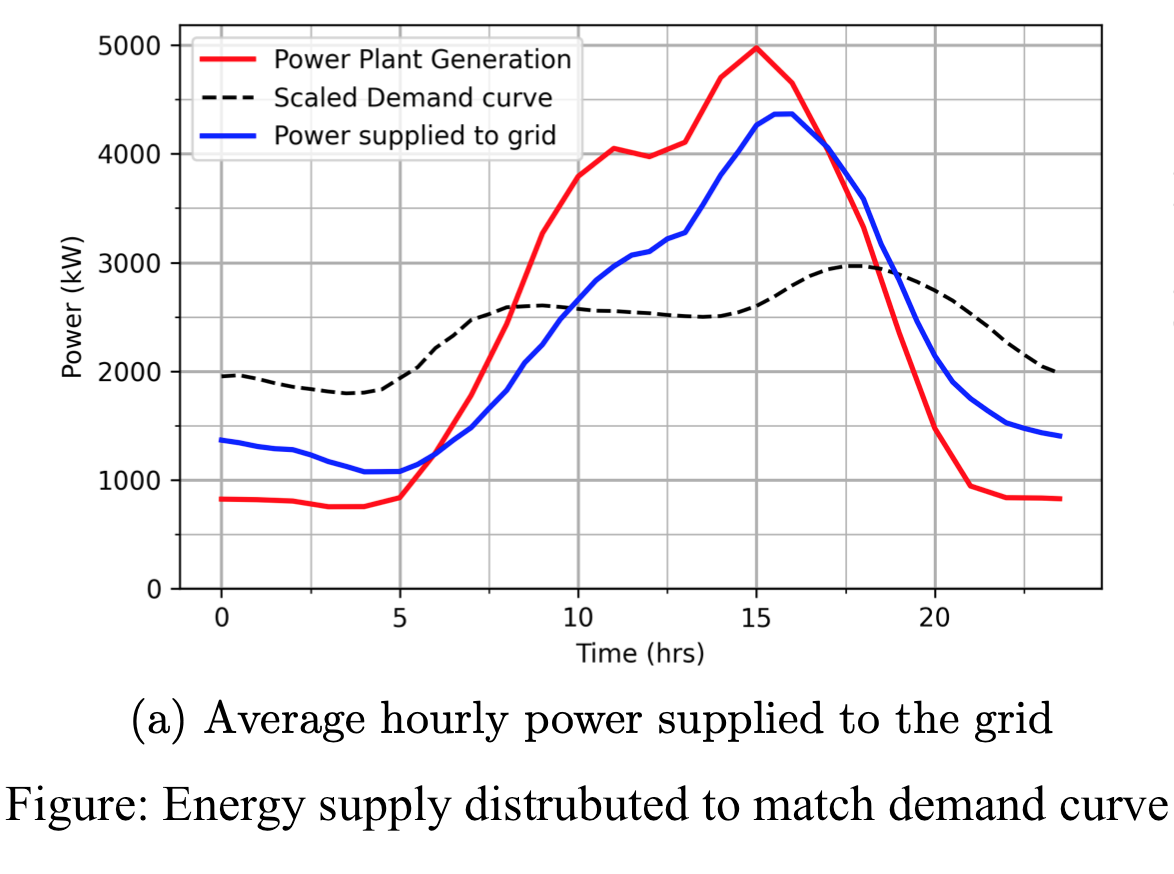 The model simulated battery discharge based on hourly electricity demand while including state-of-charge limits and round-trip efficiency. The BESS reduced carbon intensity, supporting improved energy efficiency and grid resilience.
Lifecycle Costing & Long-Term Performance Assessment:
Capital and operational costs of the renewable energy plant were estimated with data published by IRENA. This accounted for balance-of-system costs, maintenance, and asset replacement over a 30-year design life. The analysis demonstrated that the upfront investment (£21.34M total CAPEX) was offset by annual revenues and carbon savings, delivering an estimated annual profit of £1.31M.
This project demonstrates my abilities within ESG consulting and renewable energy/grid management. Building physics, energy modelling, and lifecycle costing were used to inform low-carbon infrastructure decisions. It shows my capability to reduce operational carbon emissions while maintaining financial and planning viability, aligned with BREEAM and UK regulatory frameworks.